
Church revitalization has garnered significant attention over the past decade as many churches face declining numbers and potential closure. Thom Rainer once estimated that “approximately 100,000 churches in America are exhibiting signs of decline towards closure.”1 Lifeway Research similarly revealed that in 2019, “approximately 3,000 Protestant churches were started in the U.S., but 4,500 Protestant churches closed.”2 Churches are declining and dying at an alarming rate.
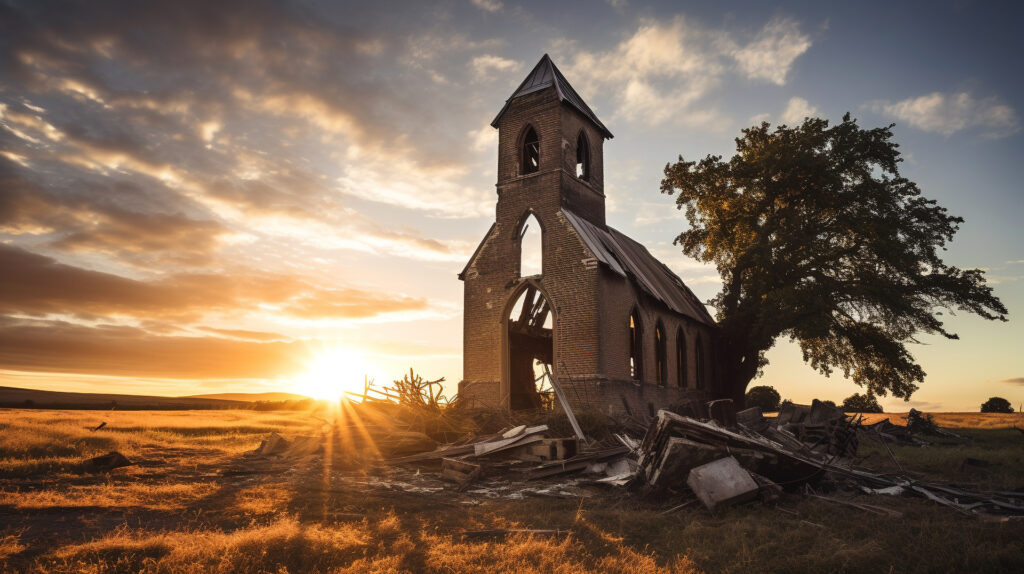
The decline in church vitality has left pastors and church leaders searching for answers. Yet Scripture does not directly address church revitalization in the same way many modern books and conferences do. Most of Paul’s letters were written to younger churches dealing with early corruption and doctrinal threats.3 Revelation, however, may provide the closest biblical parallel to dying churches because Jesus directly addresses churches in spiritual decline.4
When Jesus addresses the seven churches in Revelation, He evaluates churches differently than we often do. Christ sees what men do not see and values what churches often neglect. The weakest church and the poorest church received no rebuke from Him. Yet the church with abundant resources was actually in desperate need. Likewise, the church that appeared alive was declared dead by Jesus Himself.
This reminds us that dwindling attendance and diminished resources are symptoms rather than the root problem. Churches needing revitalization are not so simply because their worship attendance numbers are below average or their resources are limited. Churches die because “Jesus has judged them.”5 Churches are dying because, in many cases, “they stopped loving what they once loved.”6
Jesus identified this very issue in the church at Ephesus. Though they were doctrinally sound and orthodox in many ways, Christ rebuked them saying, “But I have this against you, that you have abandoned the love you had at first” (Rev 2:4). The consequence of refusing to repent was severe. Jesus warned, “I will come to you and remove your lampstand from its place unless you repent” (Rev 2:5). This is a warning that if they did not return to a zealous love for Jesus that he would remove his presence and power from that church, rendering it lifeless.
The greatest issue in churches needing revitalization is often not strategy, money, or attendance. It is an unrepentant loss of zeal for Jesus Christ. Dying churches desperately need their passion for Jesus restored.
Randall Cofield writes, “Stagnant and declining churches must strive to resuscitate an uncompromised, biblically-informed wonder-inducing worship of the living God if they are to experience revitalization.”7 Andy Davis similarly argues that if a churches are to rediscover their vitality, they must once again “tremble at God’s holiness.”8 Pastors must guide their congregation to return to a right worship of Jesus that both loves and fears him supremely; one that is God-centered rather than preference-driven attempts to entertain people. The principle is simple but sobering: degeneration sets in when churches fear or loves something more than Jesus.
This diminished zeal for Christ eventually impacts every other area of church life.
When churches stop loving Jesus supremely, selfless love for others immediately begins to diminish. Mark Clifton describes dying churches this way: “They value their own preferences over the needs of the unreached.”
Then, in the void of loving God supremely and loving their neighbors selflessly, many members default to loving themselves selfishly. This often appears through worship wars, resistance to change, and conflict whenever personal comfort is challenged.
Randall Cofield describes this shift powerfully: “The locus of worship shifted from the wondrously worthy God to the felt needs of the worshiper.” Rather than exalting Christ, dying churches often begin exalting themselves.
At its core, this is idolatry.
While the worship service may be the most visible evidence of this drift, every aspect of church life becomes affected when comfort takes priority over devotion to Jesus Christ.
Church revitalization ultimately begins with repentance and renewed affection for Christ. Before churches need better strategies, they need hearts that burn again with love for Jesus.
- Thom S. Rainer, Breakout Churches: Discover How to Make the Leap (Grand Rapids, MI: Zondervan, 2005), 45.
- Jim Davis and Michael Graham, The Great Dechurching: Who’s Leaving, Why Are They Going, and What Will It Take to Bring Them Back? (Grand Rapids, MI: Zondervan, 2023), 11.
- Tony Morgan, The Unstuck Church: Equipping Churches to Experience Sustained Health (Nashville, TN: Thomas Nelson, 2017), 1-10.
- Russell Small, Church Revitalization: A Practical Guide to Church Renewal, (Grand Rapids, MI: Kregel Ministry, 2023) 13.
- Mark Clifton and Sam Parkison, “Is It Natural for a Church to Die?,” vol. 2, Replant Journal, 20. Quoted in Bill Henard, Reclaimed Church, (Nashville, TN: B&H Publishing, 2018), 75.
- Mark Clifton, Reclaiming Glory: Revitalizing Dying Churches (Nashville, TN: B & H Publishing Group, 2016), 14.
- Randall Cofield, Strategic Church Revitalization: Paul’s Inspired Prescription for Church Renewal (Littleton, CO: Acoma, 2022), 151.
- Andrew M. Davis, Revitalize: Biblical Keys to Helping Your Church Come Alive Again (Grand Rapids, MI: Baker Books, 2017), 63.